After Sepsis From Antibiotics How Long Before They Can Be Taken Again
Sepsis is an extreme immune reaction of the man trunk toward serious bacterial infection circulating in the bloodstream. It becomes life-threatening or lethal when it manifests in the extreme stages of severe sepsis and septic shock.
The time information technology takes for full recovery from sepsis for each individual differs. Recovery depends on several factors such as the severity of infection, the patient's overall health condition, and the type of handling provided.
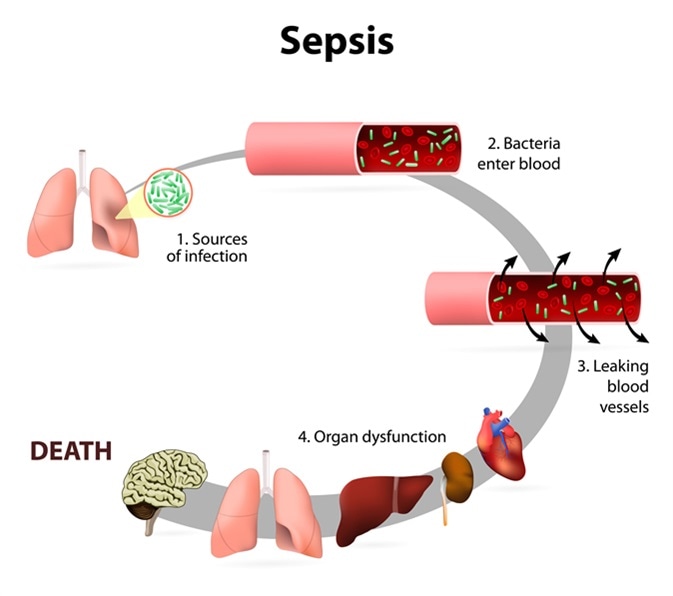
Effects of sepsis. Presence of numerous bacteria in the blood, causes the body to answer in organ dysfunction. Image Credit: Designua / Shutterstock
Mild Sepsis Recovery
In mild sepsis, complete recovery is possible at a quicker charge per unit. On average, the recovery period from this status takes about three to ten days, depending on the appropriate handling response, including medication.
Astringent Sepsis Recovery
Severe sepsis requires firsthand treatment in the disquisitional intendance area for a menses of one month or more than. Recovery is achievable, but it takes a longer time. Many individuals are known to accept regained normal wellness after astringent sepsis without residuum dysfunctions. In astringent sepsis, the recovery period duration varies from patient to patient, as information technology depends on the number of organs impacted by the infection and the extent of organ dysfunction.
Post-Sepsis Syndrome (PSS)
About 50% of severe sepsis survivors experience either short- or long-term cognitive and physical problems, collectively termed every bit mail-sepsis syndrome, during their recovery menstruum. The difficulties may include physical (excessive fatigue, weaker muscle forcefulness, bloated limbs, and chest hurting), psychological (anxiety, memory loss), and mental (inability to exercise elementary arithmetical calculations) issues.
Recovery from Mail-Sepsis Syndrome:
It is necessary to provide rehabilitation facilities to the patient so that they tin return to normal life. The duration of recovery from PSS is about two years or more than.
Recovery at infirmary: Recovery from mail-sepsis syndrome is initiated in the hospital by the physiotherapist, who helps the patients to carry out simple everyday activities on their own, such as:
- bathing, getting dressed, and walking
- doing physical exercises, as brash by the physiotherapist, in order to regain muscle force
Recovery at home: Subsequently discharge from hospital, the sepsis survivor needs detailed care at home along with regular reviews with the healthcare provider.
- They need to have complete rest and build up their strength with slowly increasing activities, as they are likely to feel weak and tired.
- A balanced diet is essential. Modest meals and supplemental nutrition drinks are suggested for those with a lack of ambition.
- To avoid depression and anxiety, interaction with family and friends is necessary.
- Modest targets are fixed to achieve daily tasks.
Recovery Later a Hospitalization for Sepsis
Septic Shock Recovery
Septic shock is a life-threatening stage of generalized infection, where the chance of patient survival is but nigh 50%, owing to multiple organ dysfunction associated with low blood pressure. Complete recovery from septic daze would imply the termination of whatsoever auxiliary therapies, which is not commonly possible. In most cases, a patient with pre-existing chronic disease who survives septic shock is probable to demand lifelong supportive handling because of permanent organ dysfunction.
Rehabilitation for Patients with Amputated Limbs
Amputation of a part of the body, such equally one or more than fingers or toes, or of a limb, either in part or completely, is sometimes done to increment the rate of survival in patients who develop gangrene during septic shock. Amputation leads to scarring and changes in the structure of normal tissue, which is termed contractures, as a result of the normal wound healing process. To preclude contracture, the physiotherapist will recommend
- exercises to make the joint muscles mobile
- scar massage once it is healed;
- application of appropriate splints to hold the scar area in a stretched position
- appropriate medication to avoid pain
- in example of amputation of lower limbs, the use of prosthetic (artificial) limbs is helpful for the independent motility of immature patients, while crutches or wheelchairs may exist useful for elders
Rehabilitation of Patients with Kidney Damage
Even later on surviving septic shock, some patients require lifelong dialysis due to kidney failure.
- The patient should perform physical activities like walking and moderate exercises
- Perform pocket-size tasks with a goal-oriented approach to achieve eventual independence to as large an extent as possible
- Go for dialysis therapy as scheduled past the doc
- Since dialysis is non a cure, the patients may be registered for renal transplantation to ensure partial or complete recovery
New Findings in Recovery of Sepsis
Patients with late stages of sepsis need more time to recover when there is mail service-sepsis or sepsis-induced organ dysfunction. More research or studies are needed to discover the all-time way of overcoming these complications.
Neutralization of HMGB1 Protein
A contempo report by the Journal of Leukocyte Biological science states that if a protein chosen high mobility grouping box 1(HMGB1), which is elevated in the belatedly stages of sepsis, is increased or neutralized, white claret cell (neutrophil) dysfunction tin be corrected. This promotes the power of the body to destroy bacteria during the recovery period.
Mesenchymal Stalk Prison cell Therapy
The world'south first trial of stem cell therapy for sepsis was performed in Ottawa. A septic daze patient in Ottawa infirmary was administered 30 one thousand thousand mesenchymal cells along with the specific handling for sepsis, which resulted in complete recovery.
References
- http://www.medindia.cyberspace/news/a-new-arroyo-to-septic-shock-recovery-170575-1.htm
- http://www.nhs.uk/Conditions/Blood-poisoning/Pages/Introduction.aspx
- http://world wide web.australiansepsisnetwork.internet.au/community-awareness/life-sepsis
- https://www.cdc.gov/sepsis/pdfs/life-subsequently-sepsis-fact-canvass.pdf
- https://www.nhsinform.scot/illnesses-and-conditions/claret-and-lymph/blood-poisoning-sepsis
- http://sepsistrust.org/public/recovering-from-sepsis/
- https://rorystauntonfoundationforsepsis.org/surviving-sepsis/
- https://www.kingstonhospital.nhs.u.k./patients-visitors/sepsis/recovering-from-sepsis.aspx
- http://stemcellfoundation.ca/en/2016/03/31/man-makes-remarkable-recovery-from-septic-shock-after-stem-jail cell-transplant/
Further Reading
- All Sepsis Content
- Everything Y'all Need To Know About Sepsis
- Sepsis Diagnosis
- Causes and Symptoms of Sepsis in Newborns
- Diagnosis and Treatment of Sepsis in Newborns
Source: https://www.news-medical.net/health/Recovering-from-Sepsis.aspx#:~:text=On%20average%2C%20the%20recovery%20period,appropriate%20treatment%20response%2C%20including%20medication.
0 Response to "After Sepsis From Antibiotics How Long Before They Can Be Taken Again"
Post a Comment